
Tile roofing shows up on Mediterranean, Spanish colonial, and high-end custom homes across North & South Carolina for one reason: nothing else lasts as long or looks as distinctive. But tile is a different category of decision than shingles or metal - the weight alone can require checking whether your roof structure can carry it before price ever enters the conversation.
What Is a Tile Roof, Really?
A tile roof is made of individual, overlapping units - clay, concrete, or engineered polymer - hung on wood battens or fastened directly to the deck, rather than the continuous sheets or strips used for shingles and metal. Each tile sheds water independently, which is part of why a well-installed tile roof outlasts nearly every other residential roofing material by decades.
Tile Roof Cross-Section - Where the Weight Comes From
Types of Roofing Tile
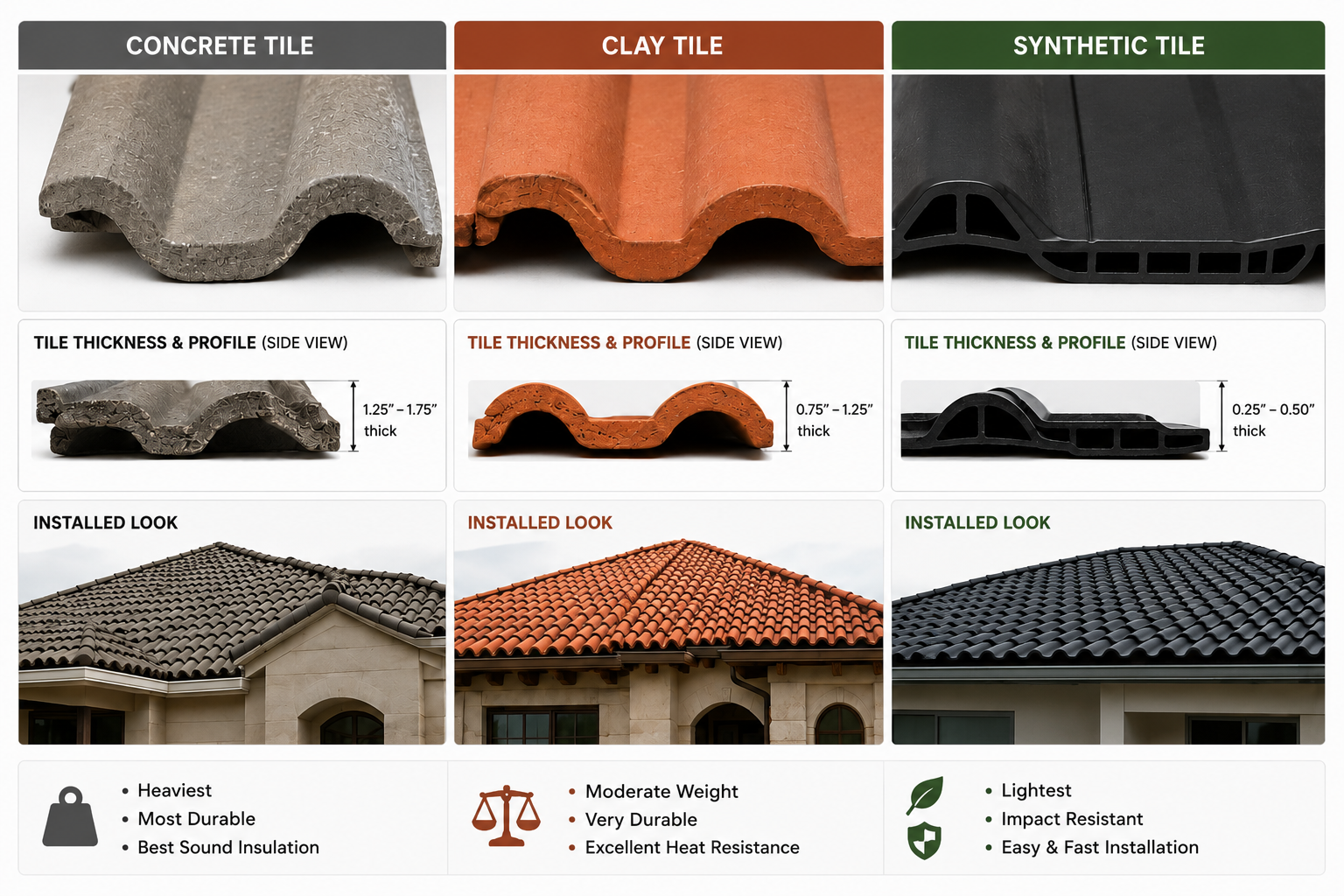
Almost every residential tile roof falls into one of three material categories - each with a very different weight, price, and lifespan profile.
Concrete Tile
Molded from sand, cement, and pigment, concrete tile is the most common tile choice in the US because it costs roughly 30-40% less than clay while still delivering a 40-50 year lifespan and the same Mediterranean or Spanish profile options.
- Lifespan: 40-50 years (up to 75 with maintenance)
- Weight: ~9.5-12 lbs/sq ft
- Look: flat, S-curve (barrel), or scalloped profiles in many colors
- Best for: homeowners who want the tile look and longevity without clay's price premium
Clay Tile
Fired from natural clay, this is the original roofing tile - some clay roofs in Europe have lasted well over a century. It holds color permanently since the pigment is baked through the entire tile rather than coated on, and it's the tile most associated with Spanish colonial and Mediterranean architecture.
- Lifespan: 50-100+ years
- Weight: ~9-14 lbs/sq ft depending on profile
- Look: permanent, kiln-fired color - terracotta, blends, or glazed finishes
- Best for: historic homes, Spanish/Mediterranean architecture, and owners who want a true multi-generation roof
"With tile, the conversation always starts with the rafters, not the shingle sample book. If the structure can't carry it, everything else is a moot point."
- The RoofEstimate Roof Repair Co. TeamSynthetic / Composite Tile
Made from engineered polymers or rubber composites molded to replicate the look of clay, slate, or shake, synthetic tile was built to solve tile's biggest drawback: weight. Most synthetic tile weighs close to what asphalt shingles weigh, which means most roofs can carry it with no structural upgrade at all.
No Reinforcement, Usually
At 3-5 lbs/sq ft, synthetic tile rarely triggers the rafter and decking upgrades that clay and concrete often require.
Skips $3-$8/ft reinforcementClass 4 Hail Resistance
Most synthetic tile lines carry the highest impact rating available, often qualifying for an insurance premium discount.
Ins. discount eligibleMore Foot-Traffic Tolerant
Flexes slightly instead of cracking, making it more forgiving for gutter cleaning, solar mounting, or chimney work.
40-50 yr lifespanPros & Cons of Tile Roofing
Before comparing the three tile types against each other, it's worth weighing tile as a category against other roofing materials.
| Pros | Cons |
|---|---|
| ✓Exceptional lifespan - 40 to 100+ years depending on material | ✕Heavy - most homes need structural evaluation, some need reinforcement |
| ✓Class A fire resistance, non-combustible | ✕Highest upfront cost of any common roofing material |
| ✓Superior ventilation under the tile reduces attic heat in NC & SC summers | ✕Individual tiles can crack under direct foot pressure |
| ✓Resists rot, insects, and UV fading far longer than asphalt | ✕Fewer contractors are trained to install and repair it correctly |
| ✓Distinctive curb appeal, often increases resale value | ✕Underlayment beneath the tile still needs replacement every 20-30 yrs |
| ✓Class 4 impact-rated options qualify for insurance discounts | ✕Longer material lead times than shingles or metal |
Side-by-Side Comparison
These are general averages compiled across NC & SC installers. Exact pricing, warranties, and specs vary by manufacturer and company - contact us for numbers specific to your project.
| Feature | Concrete | Clay | Synthetic |
|---|---|---|---|
| Cost per sq ft installed | $9 - $14 | $15 - $25 | $8 - $12 |
| Lifespan | 40-50 yrs | 50-100+ yrs | 40-50 yrs |
| Weight per sq ft | ~9.5-12 lbs | ~9-14 lbs | ~3-5 lbs |
| Structural reinforcement | Often required | Often required | Rarely required |
| Wind rating | Up to 125 mph | Up to 150 mph | 110-120 mph |
| Typical warranty | 50 yr limited | Lifetime | 50 yr limited |
Structural Weight & Reinforcement
This is the step that separates tile from every other roofing material on this site: before pricing a clay or concrete tile roof, a roofer needs to confirm the existing rafters and decking can carry the added load - often 3-4x what asphalt shingles weigh. Most homes built to modern code can carry concrete tile with no changes. Older homes, wide rafter spans, or homes originally roofed in asphalt sometimes need sistered rafters or upgraded decking before tile goes on, which typically adds $3-$8 per sq ft to the project. Synthetic tile sidesteps this step for most homes since it weighs close to what the asphalt shingles it's replacing already weighed.
North & South Carolina Climate Considerations
Tile performs differently across North & South Carolina's climate zones than asphalt or metal does. In the humid Piedmont and coastal counties, tile's air gap under the profile keeps attics measurably cooler than a directly-nailed shingle roof, which shows up as a real reduction in summer cooling costs. Along the coast from Wilmington to the Outer Banks, clay and high-wind-rated concrete tile hold up well against hurricane-force wind when properly fastened, though every individual tile and its fastening method needs to be engineered for the exposure category of the specific site. In the western mountains, freeze-thaw cycles are the main concern - clay tile with low water absorption ratings resists cracking from trapped moisture far better than porous or older concrete tile, so spec sheets matter more at elevation. Statewide, the biggest practical NC-specific consideration is simply confirming a contractor has tile-specific experience, since most residential roofers here work primarily in asphalt and don't fasten, flash, or walk tile correctly.
Which Tile Is Right for Your Home?
Quick Decision Guide
Frequently Asked Questions
For homeowners planning to stay long-term, yes. Tile costs 2-4x more than asphalt shingles upfront but lasts 40-100+ years versus 20-30 years, and the lifetime cost is often lower once you factor in one or two shingle replacements over the same period.
Reinforcing a roof structure to carry clay or concrete tile typically adds $3-$8 per sq ft, depending on how much the rafters and decking need to be upgraded. Synthetic tile usually skips this cost since it weighs close to what asphalt shingles weigh.
The tiles themselves commonly last 50 years for concrete and 100+ years for clay, but the underlayment beneath them typically needs replacement every 20-30 years - work that involves removing and resetting the existing tiles.
Not safely without training. Concrete and clay tiles can crack under direct foot pressure, especially at the center of the tile. Maintenance or solar work should use foam walk pads or be done by a roofer trained to distribute weight along the tile edges near the battens.