
Slate is the roofing material other roofing materials get compared to. Quarried natural slate can outlast the house it's on by a century - but it's also heavy, expensive, and increasingly replaced in spec by synthetic composites built to mimic it. Here's how to tell which one actually fits your home.
What Is Slate Roofing?
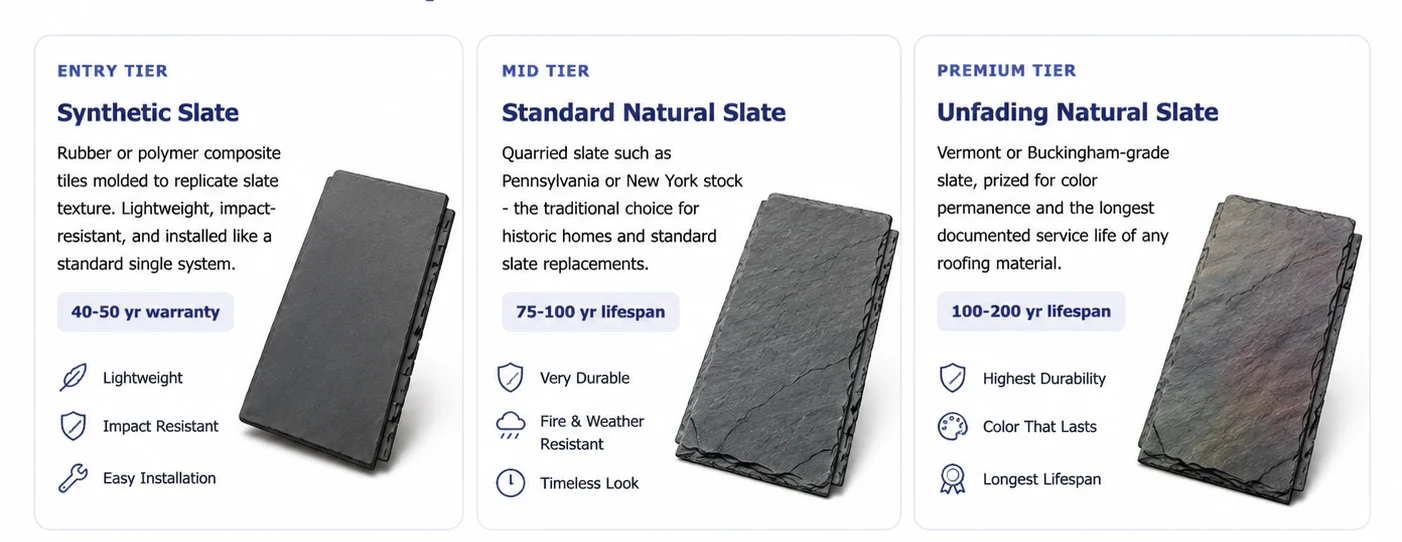
Natural slate is metamorphic rock split into thin, dense tiles and fastened directly to roof decking with copper or stainless nails. It's been used on North American homes since the 1800s, and roofs installed over a century ago are still in service today. Synthetic slate is a newer category - engineered composite tiles made from rubber, polymer, or a blend of the two, molded and textured to replicate slate's shadow lines and irregular surface at a fraction of the weight.
Natural Slate vs. Synthetic Slate
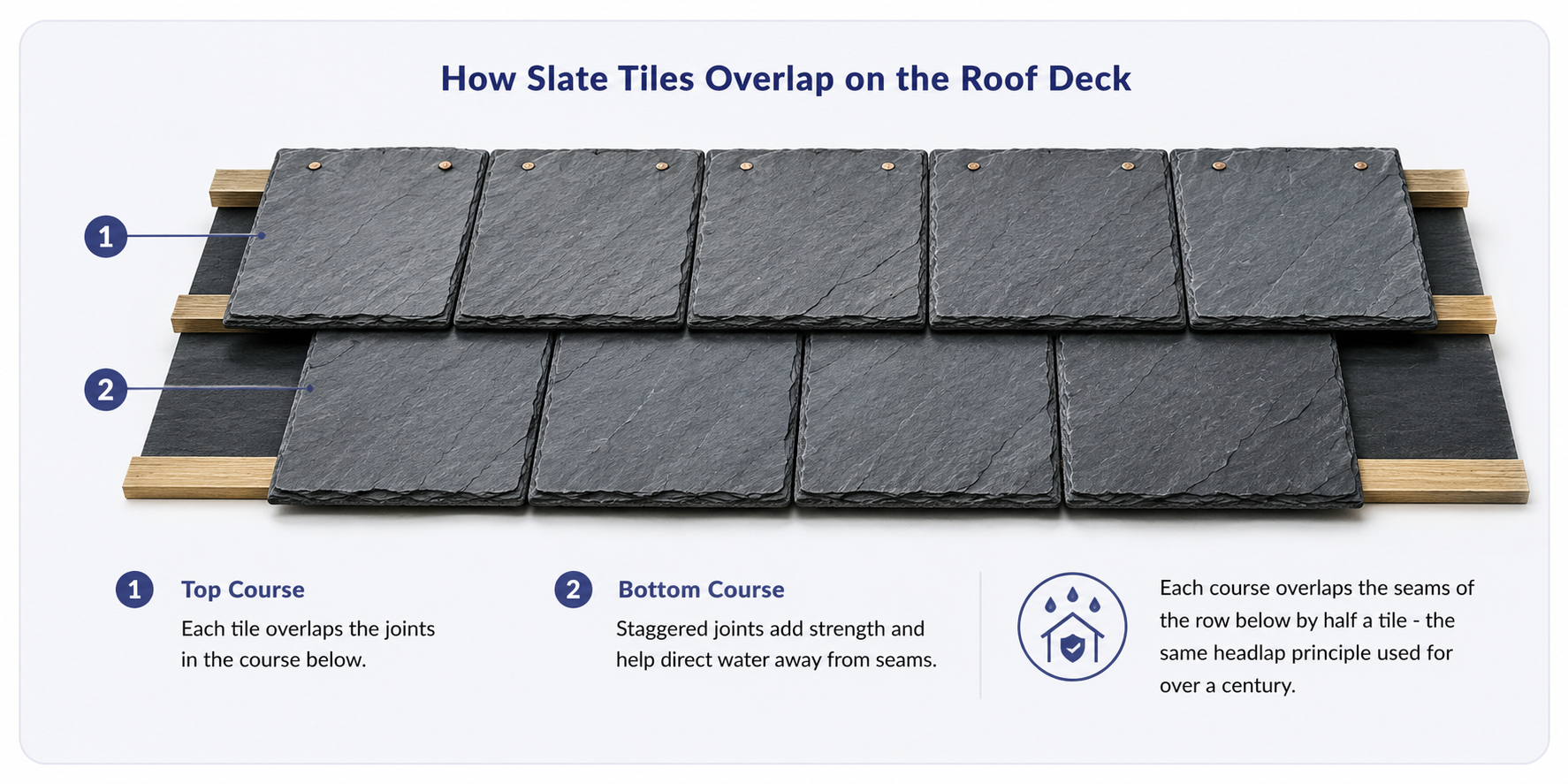
How Slate Tiles Overlap on the Roof Deck
Pros & Cons
Pros
- Longest lifespan of any roofing material - 75 to 200+ years
- Naturally fireproof and impervious to rot, insects, and UV fading
- Significant resale and historic-value premium
- Virtually no maintenance beyond periodic flashing checks
Cons
- Extremely heavy - 800-1,500 lbs per square, often requires structural engineering
- Highest upfront cost of any common roofing material
- Brittle underfoot - walking on it incorrectly cracks tiles
- Few NC & SC installers are certified for proper slate repair
Pros
- A fraction of the weight - no structural reinforcement in most cases
- 30-60% lower installed cost than natural slate
- Class 4 impact resistance on most product lines - hail-friendly
- Installed by standard roofing crews, no specialty trade needed
Cons
- Shorter lifespan - 40-50 year warranty vs. a century or more
- Some early polymer products faded or chalked under UV over decades
- Doesn't carry the same resale prestige as quarried stone
Full Specification Comparison
These are general averages compiled across NC & SC installers. Exact pricing, warranties, and specs vary by manufacturer and company - contact us for numbers specific to your project.
| Feature | Synthetic Slate | Standard Natural | Premium Natural |
|---|---|---|---|
| Cost per square installed | $700 - $1,200 | $1,500 - $3,000 | $2,500 - $5,000+ |
| Lifespan | 40-50 yrs | 75-100 yrs | 100-200 yrs |
| Weight per square | 150-300 lbs | 800-1,200 lbs | 1,000-1,500 lbs |
| Structural reinforcement | Rarely needed | Usually required | Usually required |
| Fire rating | Class A (most lines) | Class A, naturally fireproof | Class A, naturally fireproof |
| Impact rating | Class 4 (most lines) | Brittle - cracks on impact | Brittle - cracks on impact |
Cost Breakdown for NC & SC Homes
For a typical 2,200 sq ft NC & SC roof (about 22-24 squares including waste), installed totals generally fall in these ranges:
- Synthetic slate: $16,000 - $29,000 total
- Standard natural slate: $34,000 - $72,000 total
- Premium natural slate: $57,000 - $120,000+ total
Natural slate pricing swings widely based on quarry source, tile thickness, and - critically - whether the existing roof structure needs engineered reinforcement before a single tile goes on. That structural assessment should always come before a natural slate quote is finalized.
"The question isn't whether natural slate is worth it - it's whether your roof structure was ever built to carry it. That's the first thing we check, before we even talk price."
- The RoofEstimate Roof Repair Co. TeamWeight & Structural Considerations
This is the single most important factor separating slate from every other roofing material on this site. Natural slate weighs 800-1,500 lbs per roofing square - roughly 3 to 5 times heavier than architectural asphalt shingles. Most homes not originally engineered for slate need a structural engineer to evaluate rafters, decking, and load paths before installation, and reinforcement (sistered rafters, added decking, or engineered trusses) is common on older NC & SC homes being converted to slate. Synthetic slate, by contrast, weighs 150-300 lbs per square - comparable to heavy architectural asphalt - and rarely triggers a structural review.
North & South Carolina Climate Considerations
Slate's biggest weakness in NC & SC isn't the material itself - quarried stone shrugs off humidity, UV, and heat with no measurable degradation over a human lifetime. The risk is concentrated at the flashing and fastener level: copper or stainless nails and step flashing are essential, since standard galvanized fasteners corrode long before the slate itself shows wear, and a flashing failure is the most common cause of an otherwise-sound slate roof developing a leak. Coastal counties should specify copper flashing throughout for salt-air resistance, and homes in hail-prone Piedmont counties should budget for occasional cracked-tile replacement, since a well-matched slate roofer can swap individual tiles without disturbing the surrounding courses. Synthetic slate sidesteps most of these issues, since its lighter composite construction pairs with standard synthetic underlayment and fastening systems already proven across NC & SC's humidity and storm patterns.
Which One Is Right for Your Home?
Quick Decision Guide
Frequently Asked Questions
Synthetic slate runs about $700-$1,200 per roofing square installed. Standard natural slate runs $1,500-$3,000 per square, and premium unfading natural slate (Vermont or Buckingham) runs $2,500-$5,000+ per square. A typical 2,200 sq ft NC & SC home needs about 22-24 squares.
Synthetic slate is warrantied for 40-50 years. Standard natural slate typically lasts 75-100 years, and premium unfading natural slate can last 100-200 years with proper flashing maintenance.
Natural slate weighs 800-1,500 lbs per roofing square, roughly 3-5 times heavier than asphalt shingles, and most homes not originally built for slate need engineered structural reinforcement before installation. Synthetic slate weighs only 150-300 lbs per square and rarely requires reinforcement.
Synthetic slate is a strong choice for most homeowners who want the look without the weight, cost, or installation complexity of natural stone. It won't match the 100+ year lifespan or resale prestige of natural slate, but modern polymer and rubber composite products offer 40-50 year warranties, Class 4 impact resistance, and a fraction of the installed cost.